What colour will my swimming pool´s water be?
This is a common question for any person who is in the process of choosing the colour of their mosaic.
The colour of the water is not going to be determined solely by the colour of the glass mosaic chosen; there are other factors that have an influence, such as the water’s depth, the amount of light at the place where the pool is located, the surroundings, if it is an indoor or an outdoor pool and the type of lighting used.
Factors that affect pool water color beyond the tile
The more volume of water there is and the deeper it is, the bluer the swimming pool will tend to look. Sunlight is also a crucial factor: the more light there is, the clearer the water will look. Meanwhile, less light will darken the water. If the pool is surrounded by plants, it will look greener and darker, and if the surrounding landscape is desert like, the water will look clearer.
1. Pool depth Depth is one of the most underestimated variables in pool color planning. In a shallow wading area or sunshelf, water looks nearly transparent no matter what tile you choose. Once the pool reaches 4–5 feet deep, the full color effect of the tile kicks in. In pools 6 feet deep or more, you´ll notice a natural color gradient: lighter and brighter near the surface, richer and more saturated at the deep end. This is why the same white tile can look pale in a 3-foot shelf and strikingly Caribbean-blue in the main body of the pool.
2. Landscaping and surrounding environment If your backyard has mature trees, dense shrubs or a lot of greenery close to the pool, those surroundings cast green reflections onto the water surface, especially noticeable with lighter tile colors like white or sand. In heavily landscaped yards, a tile with a slight green or natural tone can actually produce cleaner-looking water than a pure white, because it works with the environment rather than against it. In open, sun-exposed backyards with minimal vegetation, this effect is much less pronounced.
3. Sunlight and time of day Your pool doesn´t look the same at 8am as it does at noon or sunset,and that´s a feature, not a bug. Morning light gives the water warm golden overtones. Midday sun, especially in southern US states, produces the most intense and saturated version of whatever color your tile creates. Late afternoon turns the water amber and rose. If you have underwater LED lights, you can design your pool´s night-time look completely independently from the tile you choose, a popular option in resort-style backyard builds.
What color will your pool water be based on the tile you choose?
Taking into account the factors mentioned above, we are going to provide you with a series of guidelines so that your choice of mosaic is a success.
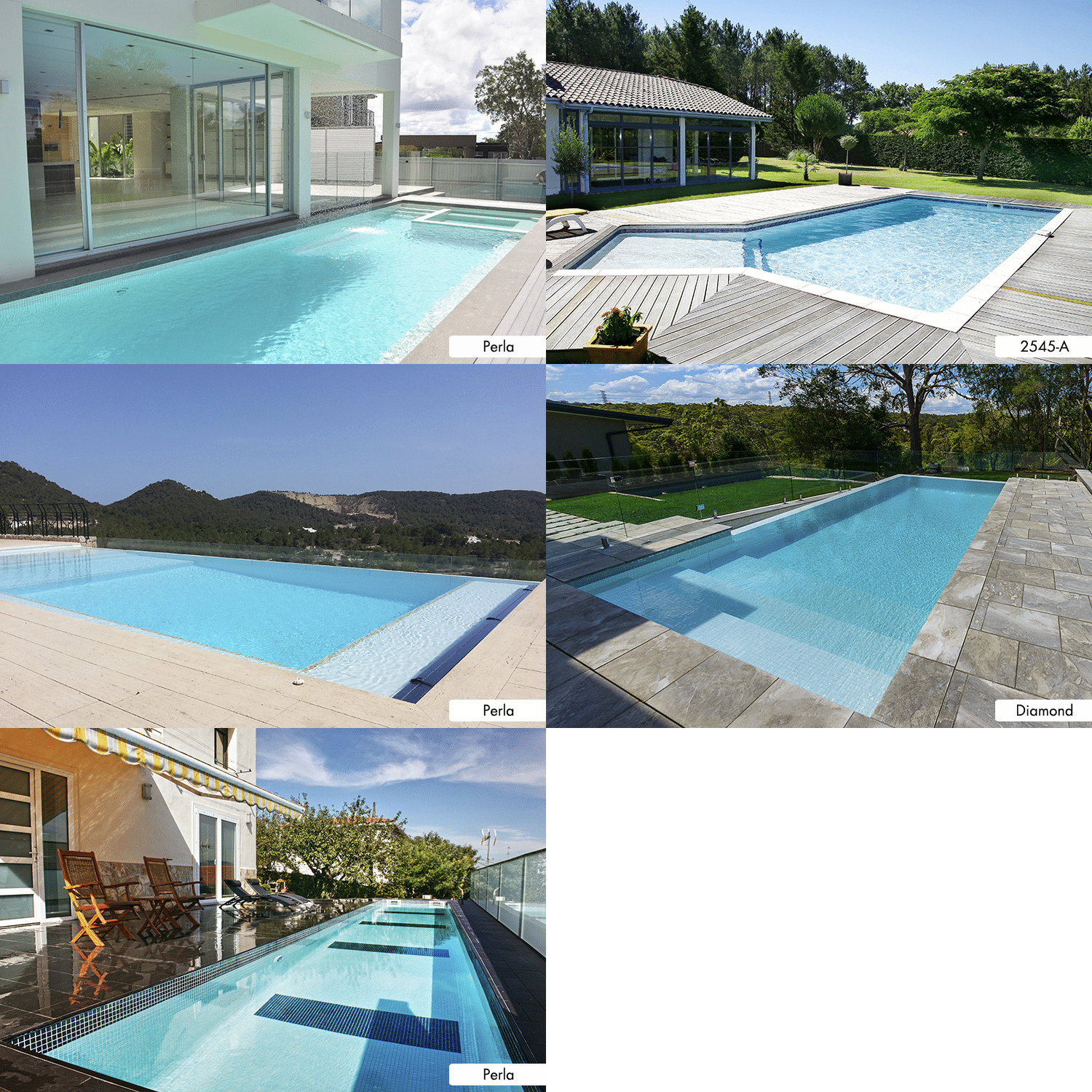
Mosaics in Shades of White
White mosaics, such as Carrara, Perla, Diamond and 2545-a will yield light, sky-blue water tones.



Mosaics in Shades of Beige and Rose-Coloured Mosaics
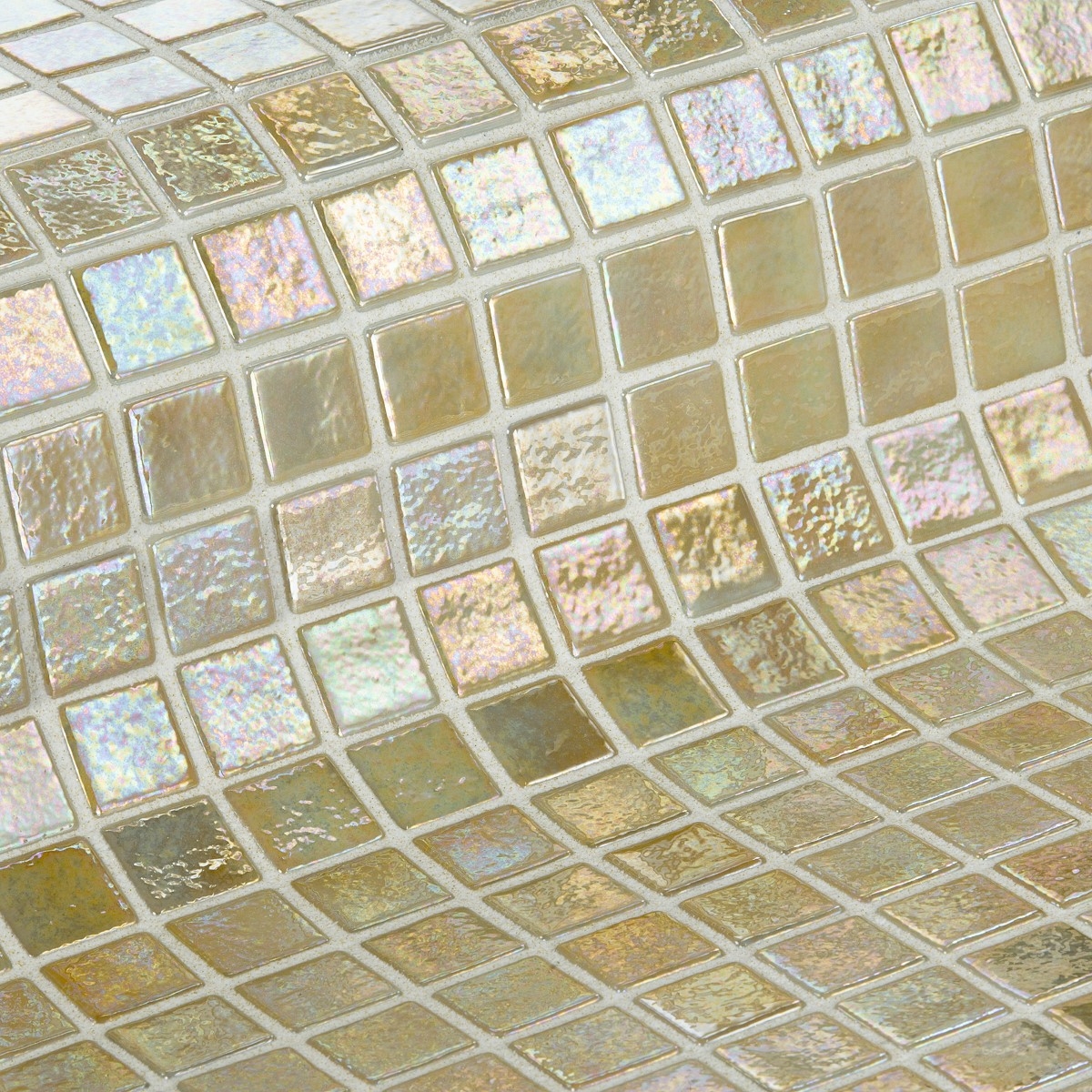
Perfect for obtaining green shades of water ranging from light to dark depending on the colour of the mosaic.
The style references we would be talking about would be, for example: Marfil, Arena, Nacar, 2514-B, 2576-B, 2596-B, 2597-B or 2523-B.




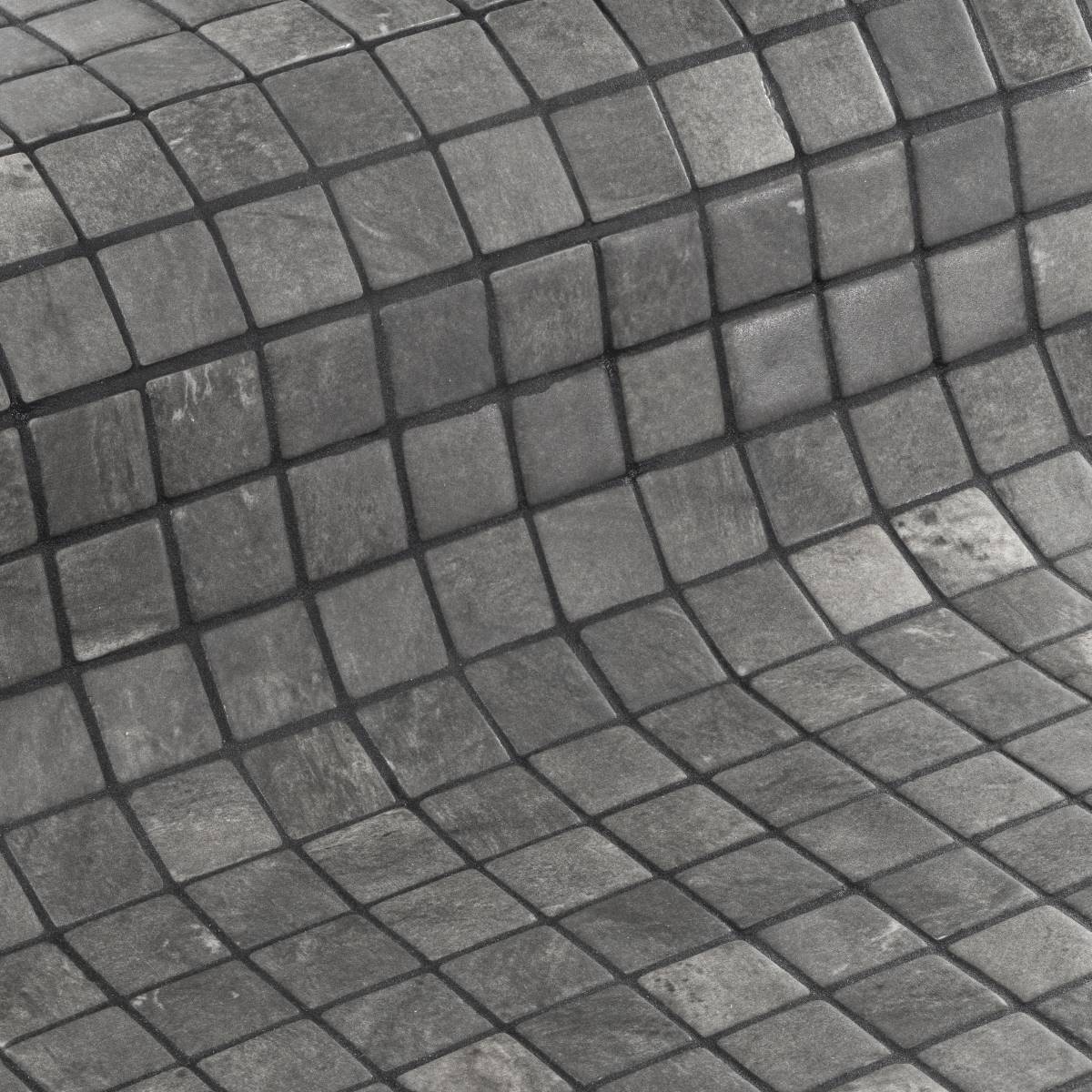
Mosaics in Shades of Grey
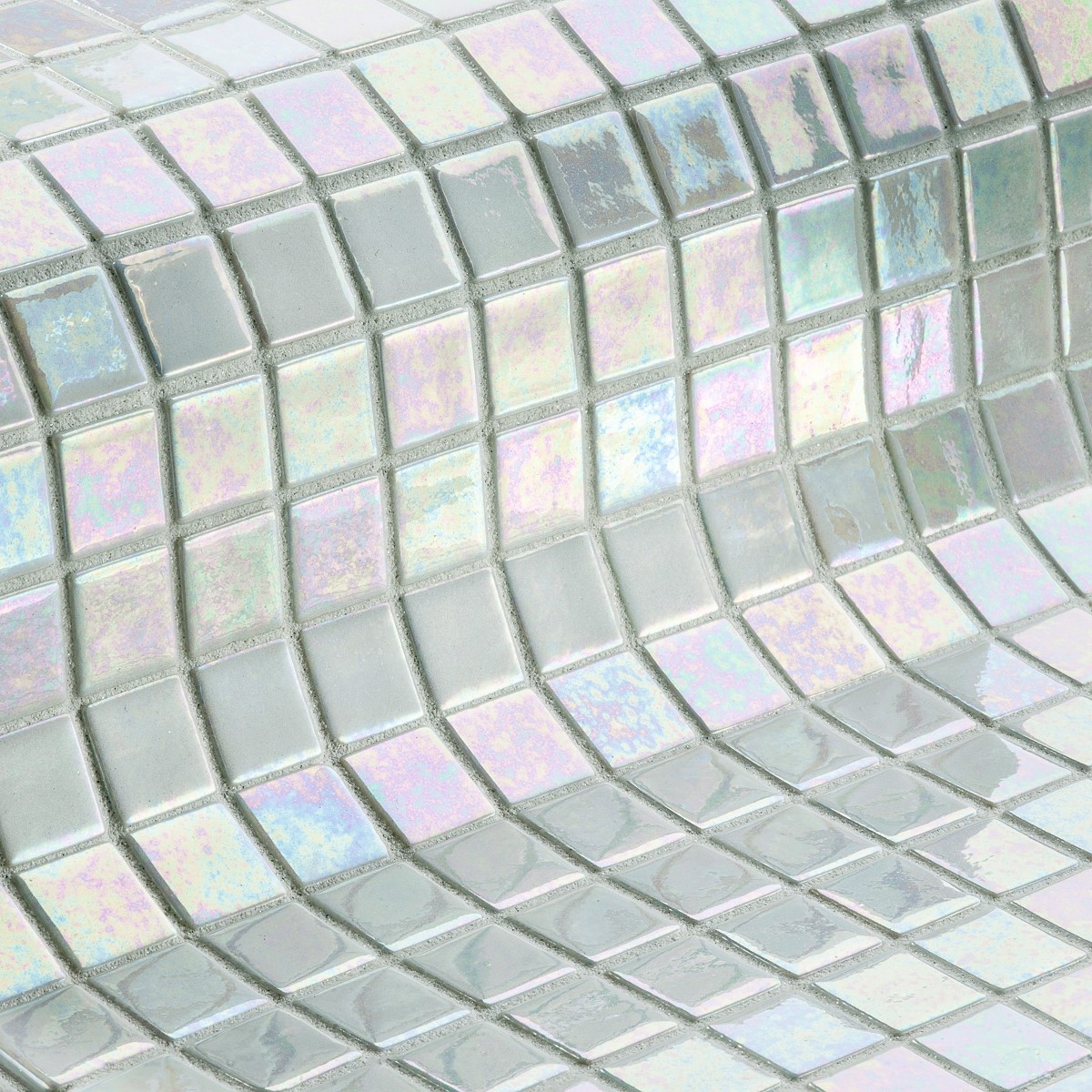
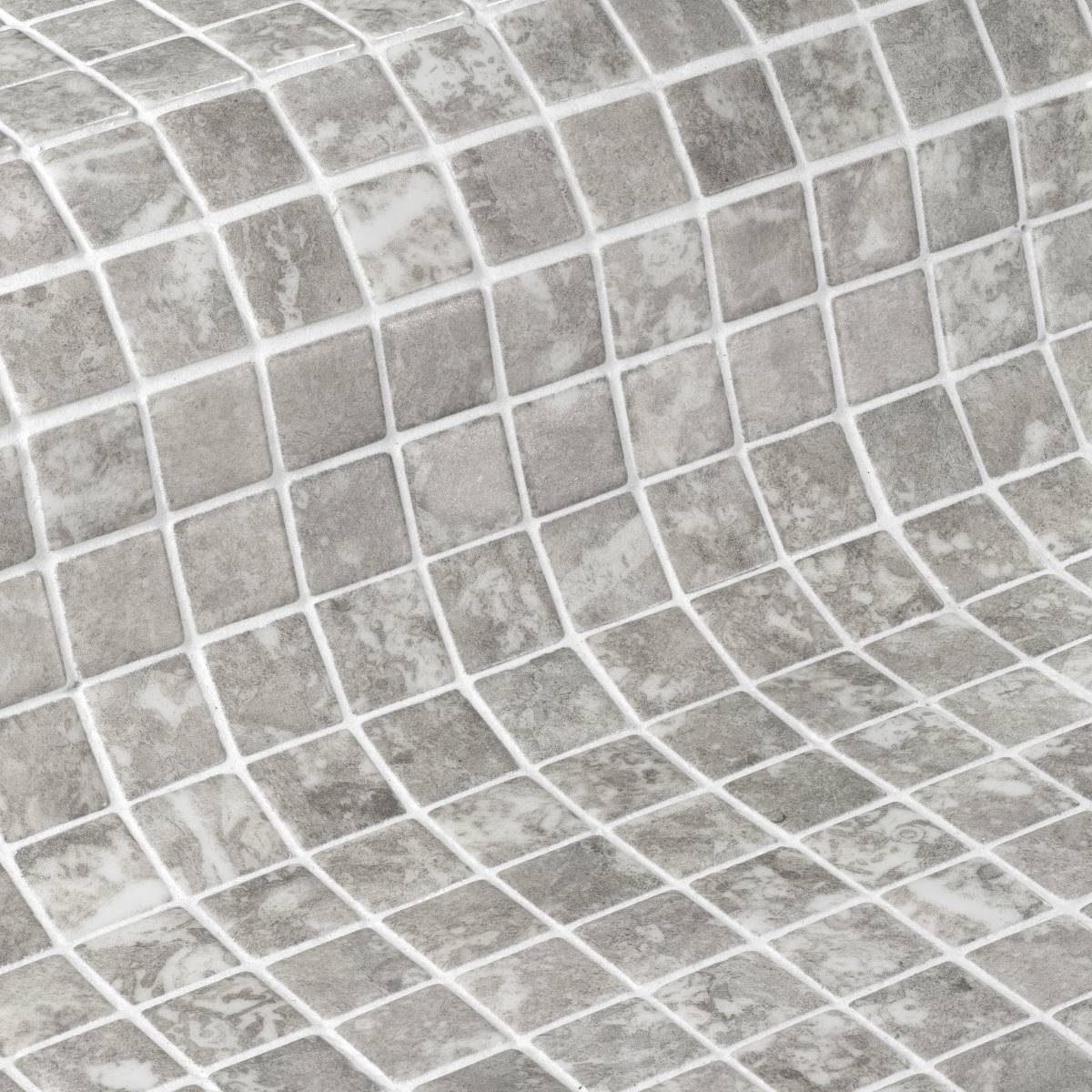
If the mosaic´s colour is grey –such as Inox, Cuarzo, Stone, 2660-A and 2522-B– the water will tend to have greyish-green colours mixed into it.


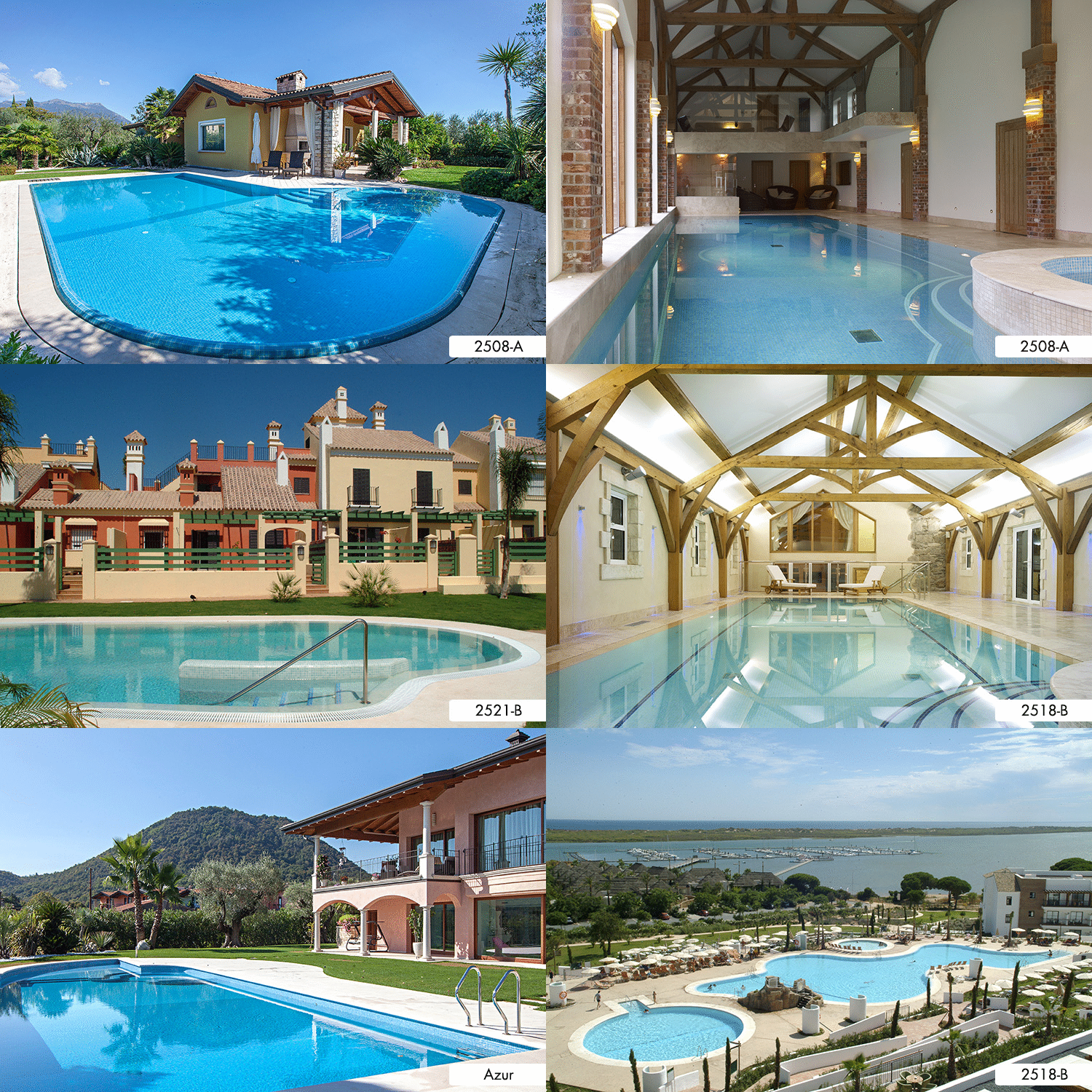
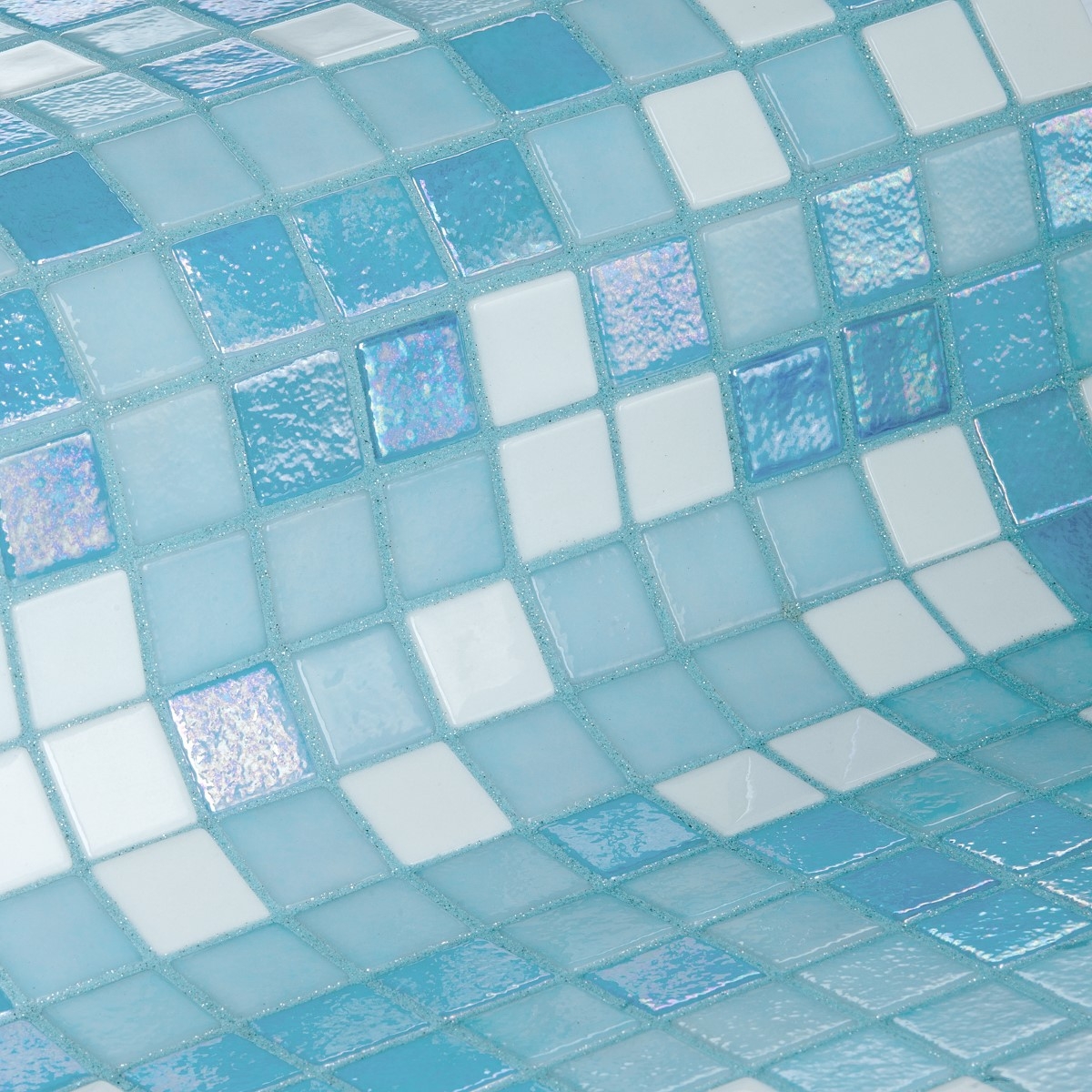
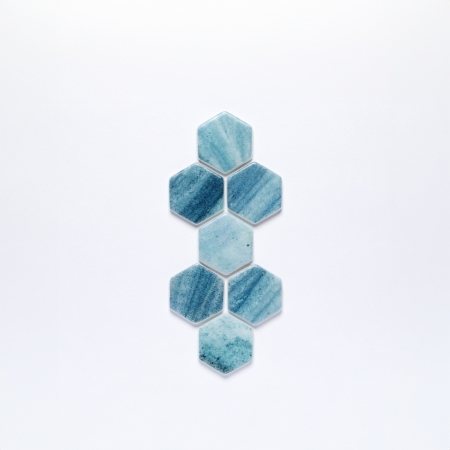
Light Blue-Green Mosaics (2508-a, 2518-b and 2529-b)
Our blue-green colours with style references such as Azur, Sky, 2521-b, 2508-a, 2518-b and 2529-b tend to yield a light, turquoise blue colour.




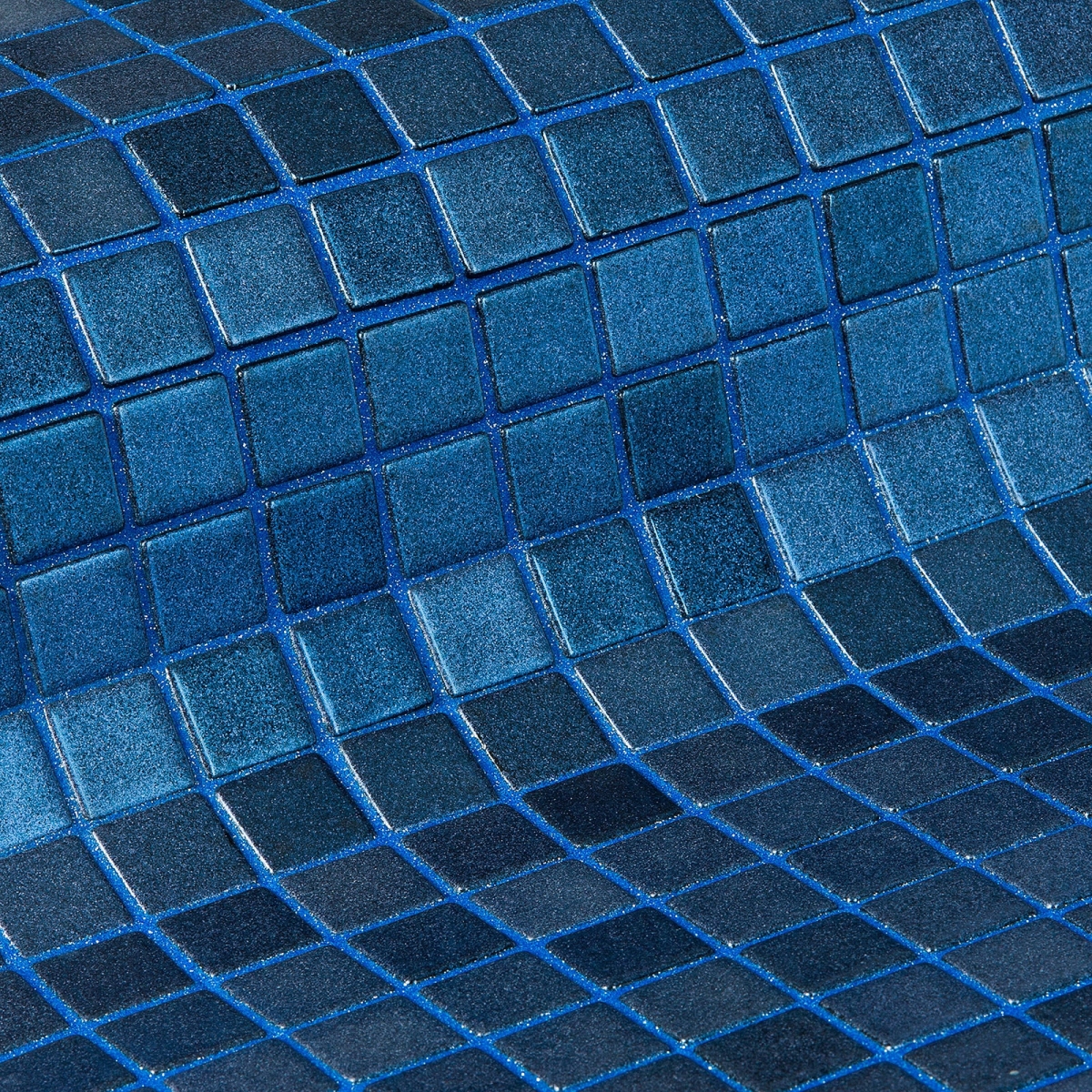
Blue Mosaics
All our blue style references such as Ocean, Zafiro, Blue Lagoon, 2505-a and 2503-d yield a water colour that ranges from light blue (for lighter mosaic shades) to intense blue (for darker mosaic shades).

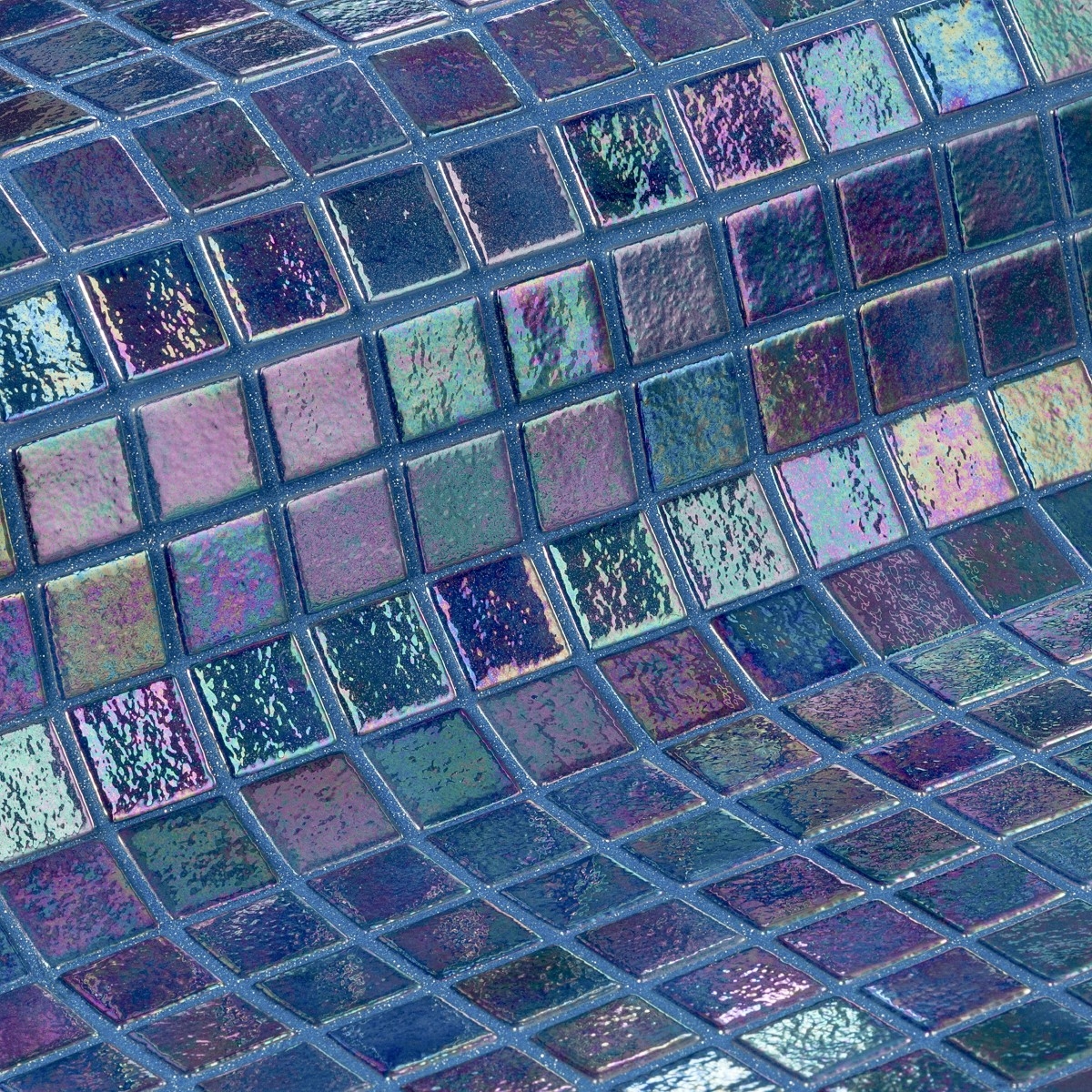



Mosaics in Shades of Iridescent Black and Dark Green
References like Ebano, 2502, Capricorn and Lava yield a natural water style and colour that is similar to that of a high-mountain river or lake.



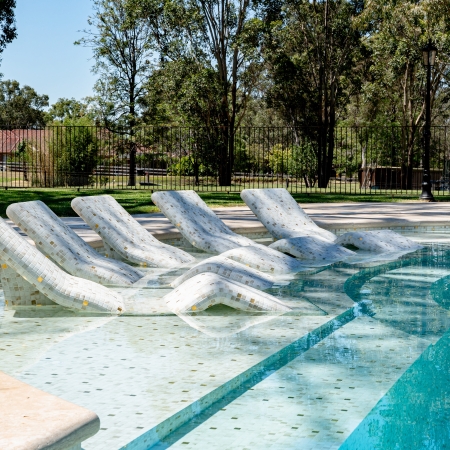
To visualize how the water in your pool will look based on the chosen mosaic, we invite you to use our swimming pool water color simulator. With this tool, you can design your own mosaic combination and obtain a realistic representation of the final outcome.
Frequently asked questions about pool water color
What color pool tile makes the water look the most blue?
White glass pool tile produces the most vivid, saturated Caribbean blue water of any finish available. Because white reflects the full spectrum of light, it amplifies the natural blue tendency of water more than any other color. The result in a full-depth backyard pool, particularly in sun-drenched climates like Florida, California or Arizona, is the kind of bright aqua blue you typically associate with luxury resorts. No plaster finish, regardless of how light, comes close to the same intensity.
How is glass pool tile different from plaster when it comes to water color?
With plaster, your color options are limited to white, off-white and a handful of tinted finishes, and the results can vary based on application and aging. Glass mosaic tile gives you precise, predictable color control because the tile color is completely stable: it doesn´t absorb water, doesn´t react to chlorine, and doesn´t fade over years of use. The color you choose on day one is the color you´ll see for decades. That level of color consistency and longevity is simply not achievable with plaster.
Can I mix two tile colors in the same pool?
Yes, and it´s a popular design choice in high-end pool builds. A lighter tile in the shallow end transitioning to a deeper tone at the bottom creates a natural gradient effect, similar to the color depth you´d see in the ocean. A contrasting waterline tile or accent color on the steps is another common approach to add visual definition. Ezarri´s Custom Mix service lets you design custom blends from any catalogue references if you want a fully personalized look.
Does pool depth affect the water color?
Significantly. A shallow sun shelf or wading area will look nearly clear regardless of tile color, there simply isn´t enough water depth for the color to develop. The full effect of your tile choice becomes visible at around 4–5 feet of depth. In deeper areas, 6 feet and beyond, the water color intensifies noticeably. This is why many designers use a lighter tile throughout and let the depth create the gradient naturally, rather than using multiple tile colors.
Is there a tool to preview what my pool will look like before choosing a tile?
Yes. Ezarri´s water color simulator lets you visualize how any tile in the catalogue will affect your pool water in real time, with adjustable depth settings. It´s by far the most useful tool for presenting color options to clients before finalizing a specification, and there´s nothing comparable offered by plaster or aggregate suppliers.
EZARRI, S.A. como responsable del tratamiento, le informa que sus datos son recabados con la finalidad de contactar con el solicitante, atender sus consultas y peticiones y para envío de ofertas e información relacionada siempre con nuestra actividad. La base legal para el tratamiento de sus datos es el consentimiento del interesado al contactar con nuestra organización. Sus datos no se cederán a terceros salvo obligación legal. Cualquier persona tiene derecho a solicitar el acceso, rectificación, supresión, limitación del tratamiento, oposición o derecho a la portabilidad de sus datos personales, escribiéndonos a nuestra dirección arriba indicada, o enviando un correo electrónico a info@ezarri.com, indicando el derecho que desea ejercer. Puede obtener información adicional aquí.